Fast Mutual Divorce Procedure: How to Apply
If both spouses agree to end the marriage, the mutual divorce procedure is usually the simplest court route in India. In most Family Courts, you apply by filing a joint petition, attending the first motion, waiting (or seeking waiver) for the cooling-off period, and then appearing again for the second motion to receive the divorce decree.
You apply for a mutual consent divorce by filing a joint petition in the correct Family Court, recording first-motion statements, and then confirming consent again in the second motion to get the decree.
If you want the bigger roadmap (mutual vs contested), read our Divorce Procedure in India: A Step‑by‑Step Guide.
Mutual divorce procedure in India: eligibility checklist
If you meet the separation requirement, both of you freely consent, and you settle money/child/property terms clearly, the court process becomes predictable and usually finishes faster.
Most mutual consent divorces run under one of these laws:
- Hindu Marriage Act, 1955 (HMA): for Hindus, Buddhists, Jains, Sikhs (and others covered by the Act)
- Special Marriage Act, 1954 (SMA): for civil marriages registered under SMA, interfaith marriages under SMA, and certain other cases
Basic conditions courts look for
- Living separately: Typically, one year or more before filing (the exact requirement depends on the law that applies).
- No possibility of living together: In plain words, the marriage has broken down.
- Free and informed consent: No pressure, threats, or fraud.
- Settlement clarity: The court expects a clear understanding of:
- Alimony/maintenance (one-time or monthly)
- Child custody/visitation (if applicable)
- Return of stridhan and belongings
- Property/loan responsibilities
- Withdrawal/closure of related cases, if any
Reality check: Mutual consent divorce is not just “sign and done.” Consent must remain alive until the court passes the final decree.
Which law applies: Hindu Marriage Act vs Special Marriage Act

Your marriage certificate and the law under which you married decide the route. HMA and SMA look similar on paper, but courts apply them through different procedural sections.
If your marriage falls under the Hindu Marriage Act (HMA)
- The mutual consent provision sits in Section 13B.
- You generally cannot present a divorce petition within the first year of marriage unless the court grants special permission in exceptional situations.
If your marriage is under the Special Marriage Act (SMA)
- The mutual consent provision sits in Section 28.
- SMA also restricts divorce petitions in the early period of marriage (read with the Act’s restriction section).
Why this matters
- It affects the court jurisdiction section you rely on.
- It affects how you show proof of marriage.
- It affects what your lawyer drafts and what your court staff expects in filing.
Where to file: choosing the correct Family Court
Filing in the wrong court causes the most avoidable delay. Choose jurisdiction carefully before you draft the petition, because a small mistake here can send you back to square one.
In most cities, mutual consent divorce petitions go to the Family Court. In places without a Family Court, the District Court handles it.
Common jurisdiction options (plain English)
You can usually file where:
- The marriage happened, or
- The respondent currently lives, or
- You last lived together as a couple
In many cases, the law also allows filing based on where the wife lives (especially when she is the petitioner) and in some special situations when a spouse lives outside India.
Practical tip: Match your petition address facts with your proof documents; courts like clean paperwork.
Documents required for a mutual consent divorce

A complete document set on day one speeds up filing and reduces adjournments. Prepare your settlement documents before you step into court.
Here is a practical checklist most courts ask for (exact list varies by court):
Core documents
- Marriage proof (marriage certificate or alternate proof if not registered)
- Address proof for both spouses
- Photo ID proof for both spouses
- Passport-size photos
- Wedding photos (often helpful as supporting proof)
Relationship timeline and separation proof
- A short marriage timeline (date of marriage, separation date, and last cohabitation)
- If you live separately: rent agreement, utility bills, or any reasonable proof (not always mandatory, but helpful)
Settlement papers
- Settlement/MoU signed by both (alimony, custody, property, stridhan, case withdrawals)
- Bank details for agreed payments (if any)
- Child-related papers (if any): school details, passports, agreed schedule
Court filing set
- Joint petition
- Affidavits (as per local court practice)
- Vakalatnama (vakalat) authorisation (if using advocates)
Short answer block:
If you can’t find the marriage certificate, courts usually accept other proof like wedding photos, invitations, and affidavits.
Step-by-step: how to apply for a mutual consent divorce

This section walks you through the exact court flow most couples follow in India, from drafting the joint petition to getting the final decree. Use it like a checklist so you don’t miss documents, dates, or settlement terms that can delay your case.
Think of it as two confirmations in court. The first motion starts the case. The second motion finishes it. The settlement terms do most of the heavy lifting.
Step 1: Finalise settlement terms (before filing)

Write down the full settlement in clear points. Avoid vague lines like “we will decide later.” Courts dislike open ends.
Include:
– Total alimony amount (or monthly amount), payment method, and due dates
– Child custody model (sole/joint), visitation days, travel permissions
– Stridhan return list and timeline
– Property division or “no claim” terms
– Loan/EMI responsibility
– Withdrawal/quashing plan for related cases (where applicable)
Step 2: Draft and file the joint petition

You file a joint petition under the correct section (HMA/SMA) in the correct court.
Courts typically list the matter for first motion after scrutiny and diary number.
If you plan to file or appear without a lawyer, skim Guidelines from the High Court for Party‑in‑Person. It is High Court-focused, but the preparation and courtroom-discipline checklist is still useful.
Step 3: First motion hearing (statements recorded)

Both spouses appear (or appear as permitted by the court) and confirm:
– They mutually consent
– They understand the settlement
– They want the marriage dissolved
The court may send you for counselling/mediation even in mutual matters. Don’t panic. It is routine.
Many courts do this because Section 9 of the Family Courts Act, 1984, asks Family Courts to make efforts for settlement wherever possible.
Step 4: Cooling-off period (or waiver request)

After the first motion, the law provides a waiting window before the second motion.
In simple terms, the law expects two confirmations: one at filing/first motion, and one later at the second motion.
In suitable cases, the court may waive the waiting period. More on this below.
Step 5: Second motion hearing (final consent)

This is the final confirmation. The court checks:
– Consent still exists
– Settlement terms look fair and workable
– Child arrangements protect the child’s welfare
If everything stands, the court grants the decree of divorce.
Cooling-off period (6 months) and waiver: what actually happens
The waiting period exists to prevent rushed divorces, but courts can waive it in proper cases when the marriage has clearly ended, and settlement issues are already resolved.
The standard rule
After the first motion, the law creates a waiting window before the second motion. The second motion also has an outer deadline (you cannot wait forever).
When courts usually consider waiver
The Supreme Court in Amardeep Singh v. Harveen Kaur (2017) explained that courts can waive the 6-month waiting period in suitable cases.
Courts typically look at factors like:
- You have already lived separately long enough
- Mediation/reconciliation attempts have failed
- You have settled alimony, custody, and property issues
- Waiting will only prolong stress with no real purpose
Important nuance
Some courts have also discussed relaxing the one-year separation requirement in exceptional cases. This is not a uniform pan-India practice. Always confirm the approach in your local court.
Timeline and cost: what to expect in real life
Most mutual consent divorces finish between a few months and about a year, depending on court pendency, the cooling-off waiver, and how clean your paperwork is.
Here’s a simple timeline view. Use it as a planning tool, not a promise.
|
Stage |
What happens |
Typical time range |
|---|---|---|
|
Settlement/MoU |
You agree on money, custody, and property |
1–3 weeks |
|
Filing + scrutiny |
Petition filed, defects cleared, date allotted |
1–4 weeks |
|
First motion |
Statements recorded, counselling may happen |
1 day to 2 dates |
|
Cooling-off |
Waiting period (unless waived) |
up to 6 months |
|
Second motion |
Final statements, decree granted |
1 day to 2 dates |
Court fees and advocate fees
- Court fees: Usually modest, but they vary by State rules and court.
- Advocate fees: Varies widely by city and complexity (custody/property cases cost more).
If you want a predictable cost, keep the settlement simple, bring complete documents, and avoid changing terms after filing.
Special situations that change the process
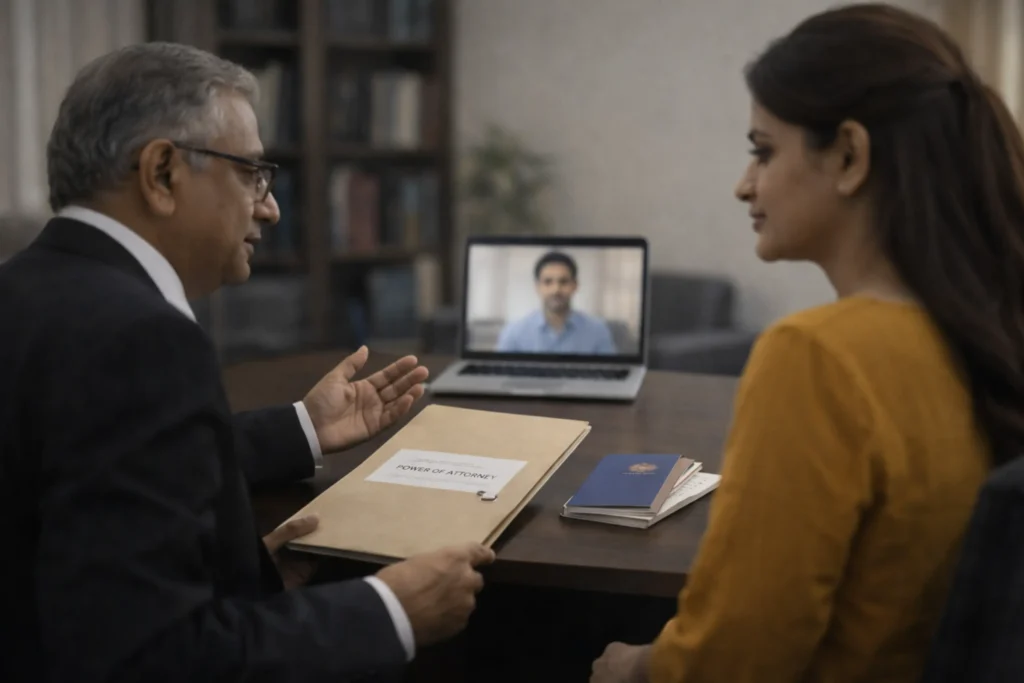
Mutual consent stays simple only when consent stays steady, and settlement stays practical. Kids, overseas spouses, and pending criminal/maintenance cases add extra court checks.
1) If one spouse is abroad (NRI/overseas)
Many courts allow practical solutions like:
- Clubbing dates to reduce travel
- Using video conferencing where permitted
- Limited Power of Attorney arrangements for procedural steps
But every court applies its own practice. Plan travel and dates early.
2) If you have a child
Courts focus on the child’s welfare.
A workable plan includes:
- Who the child lives with
- Visitation schedule (weekends/holidays)
- Travel permissions and passport handling
- School fee responsibility
3) If there are ongoing cases (DV, 498A, maintenance, etc.)
You can still file a mutual divorce, but your settlement should clearly mention:
- Which cases will you withdraw
- When will you file closure/compromise applications
- Whether any payments are linked to those steps
4) If one person does not appear for the second motion
Without a second motion consent, the court usually cannot grant a mutual divorce.
For a practical reading on why second-motion consent matters, see the Supreme Court’s discussion in Hitesh Bhatnagar v. Deepa Bhatnagar (2011).
If consent breaks, the legal path changes. The other spouse may have to consider other legal routes.
5) If someone wants to withdraw consent
Courts treat mutual consent as voluntary. A spouse can generally withdraw consent any time before the final decree.
The Supreme Court in Sureshta Devi v. Om Prakash (1991) made the core point clear: consent must continue until the court passes the final decree.
Can you apply online for a mutual consent divorce?
India has an e-filing system, but adoption varies. Many litigants still file physically in Family Courts, even when online tools exist.
If your court supports it, you can start here: eCourts eFiling Services portal.
Online filing depends on:
- whether your court has enabled e-filing for that case category
- whether you file through an advocate account or as a petitioner-in-person
- local court instructions for uploading documents and paying fees
Practical approach: Use online systems for convenience where available, but stay ready for physical verification and in-person statements if the court asks.
After the divorce decree: what you should do next
A decree ends the marriage, but paperwork after the decree protects you from future disputes. Do the “boring” steps while things are calm.
- Collect certified copies of the decree.
- Follow through on settlement steps (payments, stridhan return, case withdrawals).
- If any settlement payment gets stuck, a short legal notice for recovery of money can be a practical first step before you escalate the dispute.
- Update records if needed (bank nominees, passports, insurance, property records).
- For remarriage, ensure the decree has become final as per appeal rules.
What experienced advocates know
Most delays come from incomplete settlement terms and messy paperwork, not from the law itself. Clean drafting reduces court friction more than anything else.
Here are the mistakes I see repeatedly in Family Courts:
- Vague settlement terms. If you write “custody will be mutual,” the court will ask: What does that mean on weekdays, school days, holidays, and travel?
- No clear payment trail. If alimony is involved, plan a clean bank trail. Courts prefer clarity: amount, mode, and timing.
- Ignoring pending cases. If you have DV/498A/maintenance matters, decide the closure plan upfront. Courts dislike surprises.
- Wrong jurisdiction filing: A perfect petition filed in the wrong court still fails. Confirm jurisdiction before drafting.
- Second motion delay: If you miss the statutory outer window for the second motion, you may have to start again.
If you want the fastest lawful outcome: settle everything in writing, bring all IDs, keep one consistent story about dates, and avoid emotional amendments after filing.
For the broader backdrop on why Family Courts feel busier today, see Divorce Rate in India 2026: Causes, Laws, Trends.
FAQs
How long does a mutual consent divorce take in India?
If the cooling-off period applies, it commonly takes around 6–12 months. If the court waives the waiting period, some cases finish faster, depending on pendency.
Can we get a mutual divorce in 3 months?
Sometimes, yes, if the court waives the cooling-off period and your paperwork and settlement are complete. Many courts still take longer due to scheduling.
What documents are required for a mutual consent divorce?
You usually need marriage proof, ID, and address proofs for both spouses, photos, and a signed settlement/MoU covering alimony, custody, property, and stridhan.
Can we file a mutual divorce without a marriage certificate?
Often, yes. Courts may accept alternate proof like wedding photos, invitations, and affidavits. The exact requirement varies by court.
What is first and second motions in mutual divorce?
First motion is the first court appearance where you file and confirm mutual consent. The second motion is the later appearance where you confirm again, and the court grants the decree.
Can one spouse withdraw consent after filing?
Yes, in many cases, a spouse can withdraw consent at any time before the final decree. Without continuing consent, the court usually cannot grant a mutual divorce.
What if my spouse does not come for the second motion?
If a spouse does not appear or refuses to confirm consent, the mutual divorce usually stops. Courts generally do not grant a decree without second-motion consent.
Can we apply for a mutual divorce online?
India has e-filing systems, but availability depends on your court. Even with online filing, courts may still require physical verification and personal statements.
LawGhar is a legal blog for informational and educational purposes only. The information provided herein does not constitute legal advice and should not be relied upon as such. Viewing this content does not create an attorney-client relationship between you and LawGhar, its owners, or contributors. Always consult with a qualified legal professional for advice concerning your individual legal needs.