Divorce Procedure in India: A Step‑by‑Step Guide
If you want a clear, direct overview of the Divorce Procedure in India, here it is. You can file for divorce in two main ways: mutual consent or contested. The broad steps are: check your legal grounds, choose the right court, prepare documents, file a petition, serve notice, attend hearings, and obtain the decree. Mutual consent usually needs two motions with a cooling‑off period (often waivable). Contested cases take longer due to evidence and cross‑examination. You should speak to a lawyer if your case involves children, property, or violence.
This guide from LawGhar explains the divorce process in India in plain language. It expands each step, clarifies timelines, and lists your rights so you know how to file for divorce in India with confidence.
Legal framework and why guidance matters

India has a complex legal framework for marriage and divorce. Different personal laws apply based on religion, with the Special Marriage Act, 1954 covering inter‑religion civil marriages. Family courts handle most cases. Good legal guidance helps you choose the correct law, avoid delays, and protect your rights to maintenance, custody, and property.
Key roles in family courts
- Judges manage case flow and evidence.
- Court staff schedule dates and issue summons.
- Counsel (or you, if filing in person), prepare pleadings, affidavits, and arguments.
While self‑representation is allowed, many people prefer a lawyer for drafting and strategy. LawGhar’s resources are designed to make the Divorce Procedure in India easier to follow, even if you are new to the system.
Types of divorce in India
Understanding the types helps you plan the divorce process in India.
1) Mutual consent divorce (amicable)
This is the simplest route when both spouses agree to end the marriage and settle issues like maintenance, child custody, and property. Under Section 13B of the Hindu Marriage Act (and similar provisions in other laws), the couple files a joint petition. The court records First Motion statements, waits for the cooling‑off period (often six months), and then takes Second Motion statements before issuing a decree.
Why do people choose it
- Lower conflict and cost
- Faster than a contested divorce
- Privacy and control over terms
Documents
- Joint petition with settlement terms
- Marriage proof, address proof, and photos
- Income details to support the maintenance plan
2) Contested divorce (fault divorce)
One spouse files against the other, citing legal grounds such as cruelty, desertion, adultery, conversion, mental disorder, or unsoundness of mind. Evidence, witness testimony, and cross‑examination are common. These cases take longer and may involve interim applications for maintenance or child custody.
3) Judicial separation
This allows spouses to live apart with court recognition while the marriage legally continues. It can be a step before divorce and may help parties reflect or negotiate.
4) Decree of nullity (annulment)
A marriage may be declared void or voidable for reasons such as prohibited relationships, bigamy, impotence, or lack of valid consent.
Divorce grounds under personal law
Your grounds and procedure depend on the law that governs your marriage. Below is a quick map of common personal laws. (Speak to a lawyer for your exact situation.)
- Hindu Marriage Act, 1955 (Hindus, Sikhs, Jains, Buddhists): Mutual consent; grounds include cruelty, desertion (≥2 years), adultery, conversion, mental disorder, venereal disease, renunciation, or presumption of death.
- Special Marriage Act, 1954 (inter‑religion/civil marriages): Similar grounds with procedural differences; mutual consent is possible.
- Divorce Act, 1869 (Christians): Grounds include adultery, cruelty, desertion, conversion, and others; mutual consent provisions exist after amendments.
- Muslim Personal Law: Dissolution may occur via khula, mubarat, talaq (subject to current legal limits), or through court under the Dissolution of Muslim Marriages Act, 1939.
- Parsi Marriage and Divorce Act, 1936: Lists specific grounds and provides for Parsi Chief Matrimonial Courts.
Knowing your law ensures you file in the right court and cite the correct ground, vital to a smooth Divorce Procedure in India.
The Divorce Procedure in India: step‑by‑step
This section breaks down how to file for divorce in India from start to finish. The flow varies slightly by law and by whether your matter is mutual or contested.
A) Mutual consent procedure
- Eligibility & settlement: Confirm that both spouses agree on divorce and key terms-child custody, alimony/maintenance, and property division.
- Draft a joint petition: Your lawyer prepares a petition with affidavits and a settlement agreement. Attach marriage proof and address proof.
- File in the right court: Usually, where the marriage was solemnized, where the spouses last lived together, or where the wife presently resides. This step anchors the divorce process in India.
- First Motion hearing: Both spouses confirm their free consent. The court records statements and may refer you to mediation.
- Cooling‑off period: The Law provides up to six months to reconsider. Courts can waive it if the marriage is clearly beyond repair and settlement is complete (Supreme Court on waiver & irretrievable breakdown).
- Second Motion hearing: Both spouses reaffirm consent. The court issues the decree of divorce.
Typical timeframe: 2–6 months when the cooling‑off period is waived; 6–12 months otherwise.
B) Contested divorce procedure
- Consult and prepare: Choose the correct ground. Collect documents, messages, medical records, and witness details.
- File the petition: Include facts, grounds, and reliefs (divorce, maintenance, custody). The court issues a notice/summons to the other spouse.
- Written statement & interim orders: The respondent files a defense. Parties may seek interim maintenance, residence orders, or visitation.
- Framing of issues: The court lists the points to decide.
- Evidence & cross‑examination: Affidavits are filed. Witnesses are examined and cross‑examined.
- Arguments: Counsel sum up the case.
- Judgment and decree: The court decides on divorce and related reliefs. Either side may appeal within the limitation periods.
Typical timeframe: 1–3 years, depending on complexity, pendency, and cooperation.
Where to file and key procedural details
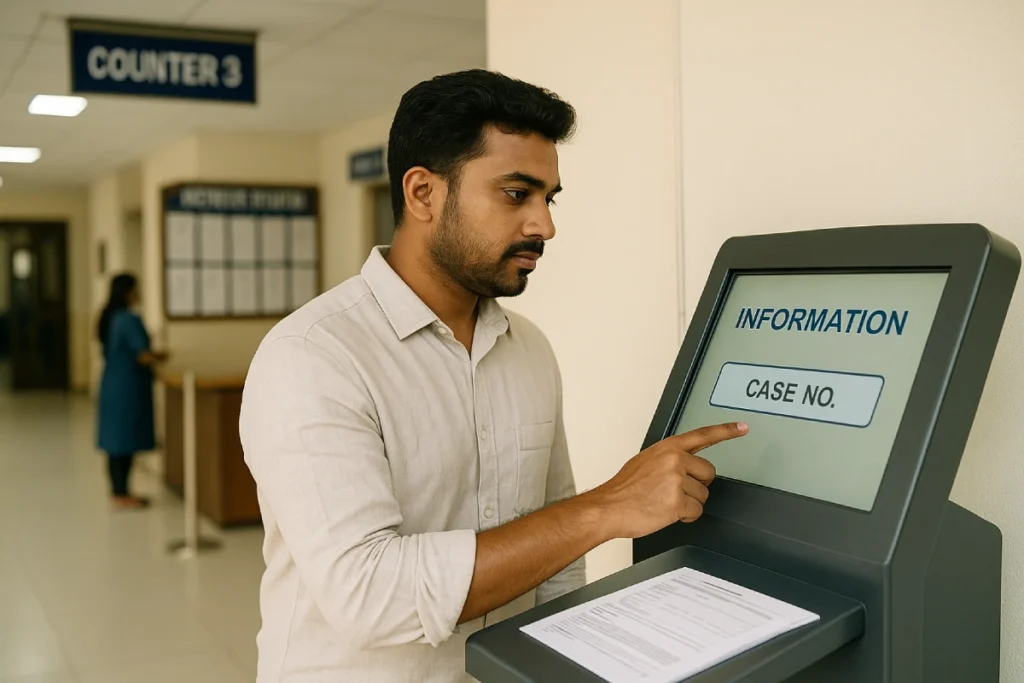
A quick guide to jurisdiction, documents, fees, mediation, and e‑filing so your case moves without delays.
- Jurisdiction: Family Courts Act, 1984 jurisdiction-file in the Family Court where the marriage took place, the couple last lived, or where the wife resides. Check local court rules.
- Documents: Marriage certificate, address proof, ID, photographs, income proofs, property details, and any evidence supporting your ground.
- Fees and costs: Court fees are modest; legal fees vary by city and complexity. Mutual consent is usually more affordable.
- Mediation: Courts often send parties to mediation to attempt a settlement.
- Digital filing: Many courts accept e‑filing via the eCourts portal and hold virtual hearings in some stages-ask the filing counter or your lawyer.
These details, though simple, save time during the Divorce Procedure in India.
Legal rights after divorce
Your rights do not end with the decree. Understand what the law provides so you can plan your life.
Alimony/maintenance
- Wife or husband may claim maintenance depending on need and ability to pay.
- Courts look at income, standard of living, duration of marriage, health, and responsibilities.
- Maintenance can be monthly or a one‑time lump sum. Be transparent with income to avoid later disputes.
Child custody and support
- The child’s best interest guides all orders.
- Custody may be joint or sole. Visitation plans are common.
- Both parents must contribute to the child’s needs. The court can modify terms if circumstances change.
Division of assets
- There is no automatic 50–50 split in India. Ownership, contribution, and equity are considered.
- Stridhan (gifts to the wife) remains hers. Shared assets can be divided, or one party can buy out the other.
- Settlement deeds in mutual consent cases should list assets, liabilities, and timelines clearly.
Timeline and common challenges
How long can it take?
- Mutual consent: 2–6 months with waiver; 6–12 months without.
- Contested: Often 1–3 years due to evidence and appeals.
Common roadblocks
- Incomplete documents or poor drafting
- Non‑appearance of parties or witnesses
- Disputes over children or property
- Frequent adjournments and court congestion
Tips to stay on track
- Keep a master file of documents and orders.
- Respond quickly to notices.
- Be open to mediation.
- Follow your lawyer’s checklist and court timelines.
Cooling‑off period waiver
Courts may waive the six‑month wait in mutual consent cases when:
- The marriage has broken down irretrievably.
- Parties have settled all issues.
- Waiting serves no purpose and prolongs hardship.
Ask your lawyer to file a waiver application with proof of settlement and separation.
Recent legal developments to know
A quick look at court rulings and law changes that impact timelines, maintenance, and faster resolution in the divorce process in India.
- Triple talaq ban: Instant triple talaq is invalid; Muslim spouses use lawful routes for dissolution (see the Muslim Women (Protection of Rights on Marriage) Act, 2019).
- Irretrievable breakdown of marriage: The Supreme Court has, in rare cases, granted divorce under its special powers-see Shilpa Sailesh v. Varun Sreenivasan (2023) judgment.
- Streamlined alimony guidelines: Courts emphasize disclosure of income and assets for fair maintenance; see Rajnesh v. Neha (2020) maintenance guidelines.
- More flexible waivers: Courts increasingly evaluate waiver requests case‑by‑case to avoid needless delay.
These trends aim to make the divorce process in India more humane and efficient.
Practical checklist: how to file for divorce in India

Use this quick list when you’re ready to act.
- Choose your route: mutual consent or contested.
- Confirm legal grounds under your personal law.
- Gather documents: IDs, marriage proof, photos, income and property records, and proof of ground.
- Decide jurisdiction: where to file.
- Draft your petition (or joint petition) with reliefs sought.
- File and pay court fees; track your case number.
- Attend hearings; cooperate in mediation.
- For mutual consent, complete First and Second Motion steps; seek waiver if eligible.
- Receive decree and certified copy; update records (bank, PAN, insurance, nominations).
- Implement settlements: transfer property, close joint accounts, update custody schedules.
FAQs
Conclusion
The Divorce Procedure in India follows a clear path when you break it into steps. Start by choosing the right route and ground, prepare your documents, and file in the correct court. For many couples, mutual consent with a sound settlement is the quickest and kindest way through the divorce process in India. If your case is contested, planning evidence and staying responsive will help you move forward. When in doubt, consult a family‑law specialist and use this guide as your checklist for how to file for divorce in India with clarity and care.